Monday, February 11, 2013

Kate Greenstreet and Quraysh Ali Lansana Links

Fabulous February Poetry Readings - Special Valentine's Day Reading

Kate Greenstreet
is a poet, graphic artist, painter, and the author of several collections of poetry from Ashanta Press, including case sensitive (2006), The Last 4 Things (2009), and, most recently, Young Tambling (2013). Greenstreet has received a New Jersey State Council on the Arts Fellowship, and her poems have been published in numerous publications, including Colorado Review, Fence, VOLT, Boston Review, Chicago Review, and other journals. Her videos can be viewed in Medium, Dewclaw, Slope, Trickhouse, Evening Will Come, and TYPO. She lives in Ireland with her husband, Max, but the couple is presently crisscrossing the US. 


You can visit her website where she has tons of poems and audio files at 
http://www.kickingwind.com/poems.html
["The giant takes us"]
Poetry Foundation
 An Interview with Kate Greenstreet
A Conversation with Kate Greenstreet


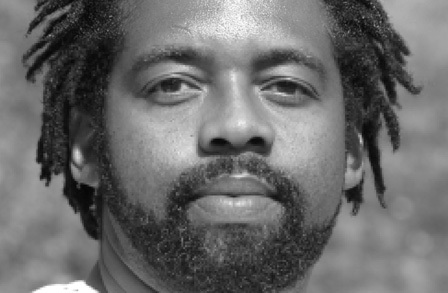
Quraysh Ali Lansana is the author of six books of poetry, most recently his mystic turf (Willow Books). He is also the author of a children’s book titled The Big World (Addison-Wesley, 1998) and a book of pedagogy, and is the editor of eight anthologies, including Dream of a Word: The Tia Chucha Press Poetry Anthology (Tia Chucha Press, 2006). He is Associate Professor of English and Creative Writing at Chicago State University, where he also served as director of the Gwendolyn Brooks Center for Black Literature and Creative Writing from 2002 to 2011.


Gerald Stern and Anne Marie Macari

This is a video taken of Gerald Stern and Anne Marie Macari's poetry reading that was held at the Performing Arts Studio, Norman Depot on November 15. The poets read from several of their books to an eager and inspired audience. It was a great night of poetry and literature. Afterwards there was an open conversation between the poets and members of the audience who had questions, a book signing and refreshments.

Macari said she has been with Stern for 15 years. It was so great to have both of them read at the University of Oklahoma and share their stories and poetry. Macari read mostly from her book Gloryland. She also talked to us about the 36 sonnets she wrote in conversation with the "creation myth" and the book of Genesis. Here is a poem she read titled "XXVI - In the Beginning Was the Animal"

In the beginning was the animal
of space licking earth to life, the night sky

lit with great herds of stars, and the paths of planets
growing radiant rubbing each other.

Heaven’s thrust and caress upon us,
green and fertile in the cracks, poultice of dust,

spore, pollen and ash. Creation’s luminous
mouth. In the beginning all that was made

was good because it was made, and what was
made and not-made knew each other, and it

was good. The stars in unending intercourse.
Heaven an amnio sac, the slopping

salty center, from there all the swimmers
breast stroking, diving, all night long, toward earth.

"Creativity is a human right. Art is what we do." - Anne Marie Macari

"While you're here, take everything you can take. Study everything you can study because it's all connected. Everything we do is all connected." - Anne Marie Macari

Macari was asked what her inspiration for writing poetry was. Where it all began for her. Writing poetry comes along differently for everybody. We all have different stories of how and why we began writing, who inspired us and who encouraged us. But one thing that Macari said really stuck out. She said that writing poetry was a calling; that it announced itself to her. I've wondered if that's how it is for all poets, all artists. Macari has a deep connection with her body, memory and consciousness - a connection that can only be explained through her poetry. It fascinates me - the mind of an artist. What they do, what the make, that is a part of them, a symbol, a moment in time, a feeling, and it is poured out in to the world, into existence, in the form of art. We say that art is imitating life, but what makes more sense to me is just the opposite. Life is imitating art. Because art is the expression, the realness, the core of what life is all about. Without art, there would be no life. There would be no emotion, no color. Our lives are our masterpiece. Life is art.

Macari said she grew up in a house with no books, but she has always written. Her piers made fun of her for reading books. But Whitman was her main source of inspiration to be a writer.

Macari also read many poems that had to do with her experience in a cave in Belize. She described the experience as one thing leading to another. There was no safety railing, she was afraid of heights and prone to panic attacks. So she stayed in the cave, in the quiet, by herself. Turning off her headlamp, she adjusted to the dark for 20 minutes and just sat there. She was surrounded by the cave art and felt her body parts just floating around her - she had an amazing out of body experience and wanted to see more...

I really enjoyed Anne Marie Macari's poetry reading. As a woman, I felt a strong connection to the messages in her poetry.

____________________________________________________________________________

Gerald Stern said that he didn't have a teacher, etc that gave him words of inspiration. His inspiration for writing came from a different place. His sister, Sylvia, died when she was 9 years old. He's written poem after poem after her. He was the only Jew in an anti-semantic neighborhood. But, he said he doesn't know where exactly his inspiration came from... it was just always there... the need to write.

"...it makes me realize that poetry and life is in the details, so carefully placed in our lives." - Gerald Stern

Stern read from his book Stealing History, winner of the National Book Award. His essay "Demystification" was amazing and one of the best things I have ever read. Listening to him read it was even more awesome. He read many poems, some old and some new, that everyone seemed to find a way in which to connect with.

Here are the poems that were featured in the readings. http://www.worldliteraturetoday.org/sites/default/files/static/docs/poetrycontestpacket.pdf

Tuesday, December 4, 2012

Timothy Bradford Poetry Reading


As you will see in the Notes section of Timothy Bradford's book Nomads with Samsonite, he has shaped many ideas, poems, memories and thoughts using or borrowing other texts from writers and artists. He has intertwined his own stories and personal memories with his memories of much that he has read and seen. While we can say we all do that, it is usually not a theme that stands alone so boldly; and it is one of the things that makes Nomads with Samonsite so unique. Quoting poets like Pound, Stein, Eliot, and gathering inspiration from these artists gives us a glance at Bradford's personal library of memory and brings the abstract qualities of the book together. It forces our minds to wander to these other texts and understand their impact on Bradford's poetry.

Before Timothy Bradford began reading poems from Nomads with Samsonite, he sang a song that was very cool and really set the tone for how the reading would go... personal and open. He sang a song that not only reflected his own beliefs, but it opened the field of all our minds to ponder and accept whatever was about to happen next. To be open to all his poetry. He told me later he sang the song as a last minute thing because of a dream he had the night before. I asked him after class to send me a copy of the song because I had loved it so much. He did send it to me, along with other key songs of Milarepa.


 Let Your Mind Stay
I can contemplate the sea
But waves make me uneasy
Milarepa tells me how to meditate on waves
If the sea’s as easy as you say
Waves are just the seas play
Let your mind stay within the sea
 
I can contemplate the sky 
But clouds make me uneasy
Milarepa tells me how to meditate on clouds
 If the sky’s as easy as you say 
Clouds are just the skies play
Let your mind stay within the sky

I can contemplate my mind
But thoughts make me uneasy
Milarepa tells me how to meditate on thoughts
If the mind’s as easy as you say
Thoughts are just the minds play
Let your mind stay within your mind


 Bradford went on to read poems from Nomads and gave us some back story on most of them. I love when poets do that. It provides a sense of where we are in space and time and lets the imagery in the mind have something to build on. What I like about Bradford's poetry, is that there is something in every poem to hang on to, something that takes the mind on a journey, but always begins with a relative, grounding point of origin. The poems are often about real objects, people, experiences, that one can connect to, even if it's in an abstract way. There are themes of exploration and consciousness throughout the book based on what we know, touch and feel in our lives, and he explores the world, sometimes playfully, but always contemplating realms of existence. My favorite poems that he read were "Study of Paris in Goose Liver, Glass, and River" and "Arboreal". 

Arboreal
The trees planted in
the median
follow me. They

could be a kind of peppertree
given the narrow,
delicate leaves, like

children's fingers, the milky-white
sap, and berries
with a spicy resinous smell.

I try not to look at them,
but there they are,
flaming red and asking

for my attention. The mind's
luminosity
adheres to such things

and makes the world leap
into being.
Without the world, consciousness

shines in the dark cave of
your skull
and can implode or enlighten

depending upon your ease
with such light.
But the alternative - perception,

parsing things up, then labels,
and finally,
the schematic diagrams of the brain -

so often seems an ego trick
to make the little
you feel essential, or in need of

a new car. Or an education.
A friend
is reading Ricoeur in translation.

(Ricoeur's words denser than daylight
is long, so he could
still be reading, though I suspect

you understand "is reading"
as "read."
Don't you know we grow old

through such interpretations?
Couldn't it all be
present progressive?)

I'm dubious about anything
in translation
especially French

literary theory, and wonder
about the hours
he spends grinding his mind,

delicate blossom, through such
machinations.
Such precious time could be

better spent in the parking lot
contemplating
the essential red

of the trees, manifested
seeminly
without translation.


-Morgen Williams

Wednesday, November 14, 2012

Gerald Stern and Anne Marie Macari

 You don't want to miss these two special events. On Thursday, November 15th, there is a Poetry Reading and Reception with the two poets, Gerald Stern and Anne Marie Macari. It will be held at the Norman Depot - Performing Arts Studio. And then on Friday, November 16th, there is A Conversation with the Authors from 3-5 p.m. at the Lab Theatre in the Old Science Hall 200.


Gerald Stern, the author of 17 poetry collections, has won the National Book Award, Jewish Book Award, and the Wallace Stevens Award, among others. in 2006 he was a nominee for the Neustadt Internatinal Prize for Literature, and Kate Daniels has called him "the U.S.'s one and only truly global poet." His most recent books include "In Beauty Bright (Norton 2012) and "Stealing History (Trinity 2012).

About his work, the poet Toi Derricotte has said, "Gerald Stern has made an immense contribution to American
poetry. His poems are not only great poems, memorable ones, but ones that get into your heart and stay there. Their lyrical ecstasies take you up for that moment so that your vision is changed, you are changed. The voice is intimate, someone unafraid to be imperfect. Gerald Stern’s poems sing in praise of the natural world, and in outrage of whatever is antihuman."


Poems
 Counting (audio)
Anne Marie Macari is an American poet. Her most recent book is She Heads Into the Wilderness (Autumn House Press, 2008). Her first book won The APR/Honickman First Book Prize in Poetry. Her poems have been published in many literary journals and magazines, such as TriQuarterly, Bloomsbury Review, Shenandoah, The American Poetry Review, Five Points, The Cortland Review and The Iowa Review, and in anthologies including From the Fishouse (Persea Books, 2009) and Never Before: Poems About First Experiences (Four Way Books).

A graduate of Oberlin College, she holds an MFA in creative writing from Sarah Lawrence. Macari has taught on the faculty of the Prague Summer Seminars.

She was born in Queens, New York and lives in Lambertville, New Jersey. She is the director of the Drew University Low-Residency MFA Program in Poetry and Poetry in Translation. She is also a member of the Alice James Books Cooperative Board.


Poems


Monday, November 12, 2012

Tom Raworth Poetry Reading

I leave most poetry readings sparked by inspiration that gets me through the week... similar to the feeling one might get after attending church on Sunday. Tom Raworth's poetry reading not only gave me inspiration, but a sense of fulfillment. After being somewhat dismayed by the criticism you sometimes hear of the poetry world, all the talk about competitiveness, the pressure to win prizes for something unique that's never been done before, the fact that yes, the only people who read poetry are in fact poets, and even though there are seemingly more poets today, the poetry movement has been left in the shadows of post-modernism...

It was refreshing to hear a very successful poet with such an organic perspective on poetry, or at least be so open about it. Especially for me, personally. Tom Raworth seemed to make poetry exciting and unexpected again. His poetry comes organically from the moment, not just with the intent of "making it new", but from a natural place. In Dr. Stalling's introduction of Tom Raworth, he referenced this excerpt of an interview with Raworth:

Josh Jones, in his interview, said:
"I think the main difficulty is the sheer number of other poets, both young and old, all of us trying to sell our couple of hundred copies to a largely absent audience. It's so hard to stand out."
Do you feel this is the case? (I suppose leading on from that question would be: do you feel that's particularly the case now, as opposed to 10/20/30 years ago?)

Raworth: "To me this is pretty irrelevant. As no-one but a relentless academic could read all the material that's now available, what does it matter? And why should you want to "stand out"? What's so important about one's writing? I don't know if there were fewer writers (I suppose statistically there must have been) around 45 years ago. They perhaps weren't so instantly visible. I've never found (except in the depressing "literary scene" sense) poetry to be a competition. Don't you, if you find someone's work interesting, recommend it to your friends? Organic (or perhaps now viral) growth. There's no tape you break after which you can relax. When we were doing Goliard Press we sold (not immediately) between 400 and 700 copies of each book. At that time the "real" publishers printed at most 250 copies. But we were the "small press". I always remember something Val said around that time: "It seems to me fame is just a load of arseholes thinking you're all right."

At the risk of sounding trite, what advice would you give younger poets?

Write for yourself as reader. Read your own writing as I is another.

For me - as a writer and a reader - this advice is all I needed to hear. How simple. Things just come out of life. These "things" that poets gather from their life experiences are folded into and expressed by the words and phrases they write, mapping out time and space with their poetry. That's what a poem is after all. For me - it meant this: It's not about writing the best poem that ever existed, or a combination of conceptual poems to write a book of poetry. What is important is that we are honest, open, that we are writing, and then reading. We should write, make art, be creative for ourselves. Making it new, as Ezra Pound said, is only part of the focus. The other part is letting the poem be, letting it exist on the page in the form we see in our minds. We are only paralyzing our own minds if we subtract from our artistic disposition to express ourselves creatively.

Tom Raworth read mostly from his book of collected poems, and then from a book he wrote in 1972 that he had lost, and found again three years ago. Even though he read many poems, the reading did not seem long enough, and we all left with a need in our hearts for more. Some poems were funny, some were a couple lines, and others had lines that hit me so hard with their beauty. A poem that I particularly loved was:

"Out of A Sudden"

the alphabet wonders
what it should do
paper feels useless
colours lose hue

while all musical notes
perform only in blue

a lombardy poplar
shadows the ground
drifting with swansdown
muffling the sound

at the tip of the lake
of the road to the south

above in the night sky
scattered by chance
stars cease their motion
poppies don't dance
in the grass standing still
by the path no-one walks.
 - Tom Raworth


by Morgen Williams