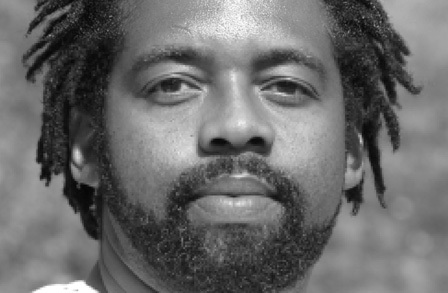
Not only has J.L. Jacobs been a part one of the Mark Allen Everett Poetry Series in the past and delivered an alluring poetry reading; she was alsoone of my mentors and favorite professors of Creative Writing when I was a student at the University of Oklahoma. She sparked my interest and love of poetry and was an inspiration to all of her students. I saw this article posted on Facebook. Hope you enjoy it and I highly recommend buying her book, The Leaves in Her Shoes.
"I don't think I've ever read a first book of poems so haunted as The Leaves in Her Shoes.
Reading these poems is like listening to snatches of song or
overhearing half-sentences, mutterings, broken chants of a lost tribe.
J. L. Jacobs assembles these shards into a startling and unforgettable
collage."
--Carol Muske
J. L. Jacobs' latest collection of poetry, The Leaves in Her Shoes,
blends aspects of the everyday and the spiritual, infusing simple
domestic rituals with a latent wonder. Spare but supple, this poetry
manifests a life tied to the earth. Evoking earlier centuries, "hidden
heirlooms," the poems provide a sense of the past's continuing presence.
Bits of earlier poems reappear later, imitating life's circularity.
In this poetry, all seasonal patterns and the human rites which match
them, be they harvest time or "communion at two Eastertides," take on a
certain mysticism. The human body exists as an extension of the earth,
so that a woman's death is "a translation of her into landscape." The
poems chart the geography of daily life, mapping not only "a land of
bogs and swamps" but also the path of "a wagonload of flowering bulbs."
J.L. Jacobs mixes with a deft hand the "voice above," the voice of the
spiritual and divine, and the "voice below," that of the earth and life.
J.L. Jacobs was born in 1967 in a small town in the rural South. She
began her own "project" of collecting folklore, particularly that of
womenfolks, at the age of eleven. She did "carry those bug-eaten books
out of the barn," and they, along with the Matriarchs she learned from,
are woven into her work. She has a B.A. from the University of Oklahoma
and an M.F.A. in poetry from Brown University. In 1992, Leave Books
published her chapbook Varieties of Inflorescence. J.L. Jacobs' work has appeared in many literary journals, including New American Writing, First Intensity, New Orleans Review, Five Fingers Review, and Talisman. She edited the 1995-96 season Of Chance Abstractions. J.L. Jacobs resides in Valliant, Oklahoma.
Poet, sinologist, and public intellectual Wolfgang Kubin was born in Celle, Germany, in 1945. While more well-known as a leading figure of European Chinese studies, he is also known as a poet. His poetry was first published in 2000 with the title Das neue Lied von der alten Verzweiflung (tr. The New Song about Old Despair). Narrentürme (tr. Fools’ Towers) was published in 2005, and Schattentänzer (tr. Shadow Dancer) in 2004. Philosophical and political in nature, his poetry reflects on the places he has lived and his travels to Madrid and Salamanca, the US, and, of course, China, which has become a second home. In 2006 he published a collection of short stories entitled Halbzeit einer Liebe (tr. Half-time of a Love). In Kubin’s fiction and poetry, readers recall the impulse behind traveling, the push to discover the distant and unknown, and if not discover, then be closer to it.
Fabulous February Poetry Readings - Special Valentine's Day Reading
Kate Greenstreet is a poet, graphic
artist, painter, and the author of several collections of poetry from
Ashanta Press, including case sensitive (2006), The Last 4 Things
(2009), and, most recently, Young Tambling (2013). Greenstreet has
received a New Jersey State Council on the Arts Fellowship, and her
poems have been published in numerous publications, including Colorado
Review, Fence, VOLT, Boston Review, Chicago Review, and other journals.
Her videos can be viewed in Medium, Dewclaw, Slope, Trickhouse,
Evening Will Come, and TYPO. She lives in Ireland with her husband,
Max, but the couple is presently crisscrossing the US.
Quraysh
Ali Lansana is the author of six books of poetry, most recently his mystic turf
(Willow Books). He is also the author of a children’s book titled The
Big World (Addison-Wesley, 1998) and a book of pedagogy, and is the
editor of eight anthologies, including Dream of a Word: The Tia Chucha
Press Poetry Anthology (Tia Chucha Press, 2006). He is Associate
Professor of English and Creative Writing at Chicago State University,
where he also served as director of the Gwendolyn Brooks Center for
Black Literature and Creative Writing from 2002 to 2011.
This is a video taken of Gerald Stern and Anne Marie Macari's poetry reading that was held at the Performing Arts Studio, Norman Depot on November 15. The poets read from several of their books to an eager and inspired audience. It was a great night of poetry and literature. Afterwards there was an open conversation between the poets and members of the audience who had questions, a book signing and refreshments.
Macari said she has been with Stern for 15 years. It was so great to have both of them read at the University of Oklahoma and share their stories and poetry. Macari read mostly from her book Gloryland. She also talked to us about the 36 sonnets she wrote in conversation with the "creation myth" and the book of Genesis. Here is a poem she read titled "XXVI - In the Beginning Was the Animal"
In the beginning was the animal
of space licking earth to life, the night sky
lit with great herds of stars, and the paths of planets
growing radiant rubbing each other.
Heaven’s thrust and caress upon us,
green and fertile in the cracks, poultice of dust,
spore, pollen and ash. Creation’s luminous
mouth. In the beginning all that was made
was good because it was made, and what was
made and not-made knew each other, and it
was good. The stars in unending intercourse.
Heaven an amnio sac, the slopping
salty center, from there all the swimmers
breast stroking, diving, all night long, toward earth.
"Creativity is a human right. Art is what we do." - Anne Marie Macari
"While
you're here, take everything you can take. Study everything you can
study because it's all connected. Everything we do is all connected." -
Anne Marie Macari
Macari was asked what her inspiration
for writing poetry was. Where it all began for her. Writing poetry
comes along differently for everybody. We all have different stories of
how and why we began writing, who inspired us and who encouraged us. But
one thing that Macari said really stuck out. She said that writing
poetry was a calling; that it announced itself to her. I've wondered if
that's how it is for all poets, all artists. Macari has a deep
connection with her body, memory and consciousness - a connection that
can only be explained through her poetry. It fascinates me - the mind of
an artist. What they do, what the make, that is a part of them, a
symbol, a moment in time, a feeling, and it is poured out in to the
world, into existence, in the form of art. We say that art is imitating
life, but what makes more sense to me is just the opposite. Life is
imitating art. Because art is the expression, the realness, the core of
what life is all about. Without art, there would be no life. There would
be no emotion, no color. Our lives are our masterpiece. Life is art.
Macari said she grew up in a house with no books, but she has always written. Her piers made fun of her for reading books. But Whitman was her main source of inspiration to be a writer.
Macari also read many poems that had to do with her experience in a cave in Belize. She described the experience as one thing leading to another. There was no safety railing, she was afraid of heights and prone to panic attacks. So she stayed in the cave, in the quiet, by herself. Turning off her headlamp, she adjusted to the dark for 20 minutes and just sat there. She was surrounded by the cave art and felt her body parts just floating around her - she had an amazing out of body experience and wanted to see more...
I
really enjoyed Anne Marie Macari's poetry reading. As a woman, I felt a
strong connection to the messages in her poetry.
Gerald Stern said that he didn't have a teacher, etc that gave him words of inspiration. His inspiration for writing came from a different place. His sister, Sylvia, died when she was 9 years old. He's written poem after poem after her. He was the only Jew in an anti-semantic neighborhood. But, he said he doesn't know where exactly his inspiration came from... it was just always there... the need to write.
"...it makes me realize that poetry and life is in the details, so carefully placed in our lives." - Gerald Stern
Stern read from his book Stealing History, winner of the National Book Award. His essay "Demystification" was amazing and one of the best things I have ever read. Listening to him read it was even more awesome. He read many poems, some old and some new, that everyone seemed to find a way in which to connect with.
As you will see in the Notes section of Timothy Bradford's book Nomads with Samsonite, he has shaped many ideas, poems, memories and thoughts using or borrowing other texts from writers and artists. He has intertwined his own stories and personal memories with his memories of much that he has read and seen. While we can say we all do that, it is usually not a theme that stands alone so boldly; and it is one of the things that makes Nomads with Samonsite so unique. Quoting poets like Pound, Stein, Eliot, and gathering inspiration from these artists gives us a glance at Bradford's personal library of memory and brings the abstract qualities of the book together. It forces our minds to wander to these other texts and understand their impact on Bradford's poetry. Before Timothy Bradford began reading poems from Nomads with Samsonite, he sang a song that was very cool and really set the tone for how the reading would go... personal and open. He sang a song that not only reflected his own beliefs, but it opened the field of all our minds to ponder and accept whatever was about to happen next. To be open to all his poetry. He told me later he sang the song as a last minute thing because of a dream he had the night before. I asked him after class to send me a copy of the song because I had loved it so much. He did send it to me, along with other key songs of Milarepa.
Let Your Mind Stay
I can contemplate the sea
But waves make me uneasy
Milarepa tells me how to meditate on waves
If the sea’s as easy as you say
Waves are just the seas play
Let your mind stay within the sea
I can contemplate the sky
But clouds make me uneasy
Milarepa tells me how to meditate on clouds
If the
sky’s as easy as you say Clouds are just the skies play
Let your mind stay within the sky
I can contemplate my mind
But thoughts make me uneasy
Milarepa tells me how to meditate on thoughts
If the mind’s as easy as you say
Thoughts are just the minds play
Let your mind stay within your mind
Bradford went on to read poems fromNomads and gave us some back story on most of them. I love when poets do that. It provides a sense of where we are in space and time and lets the imagery in the mind have something to build on. What I like about Bradford's poetry, is that there is something in every poem to hang on to, something that takes the mind on a journey, but always begins with a relative, grounding point of origin. The poems are often about real objects, people, experiences, that one can connect to, even if it's in an abstract way. There are themes of exploration and consciousness throughout the book based on what we know, touch and feelin our lives, and he explores the world, sometimes playfully, but always contemplating realms of existence. My favorite poems that he read were "Study of Paris in Goose Liver, Glass, and River" and "Arboreal".
Arboreal
The trees planted in
the median
follow me. They
could be a kind of peppertree
given the narrow,
delicate leaves, like
children's fingers, the milky-white
sap, and berries
with a spicy resinous smell.
I try not to look at them,
but there they are,
flaming red and asking
for my attention. The mind's
luminosity
adheres to such things
and makes the world leap
into being.
Without the world, consciousness
shines in the dark cave of
your skull
and can implode or enlighten
depending upon your ease
with such light.
But the alternative - perception,
parsing things up, then labels,
and finally,
the schematic diagrams of the brain -
so often seems an ego trick
to make the little
you feel essential, or in need of
a new car. Or an education.
A friend
is reading Ricoeur in translation.
(Ricoeur's words denser than daylight
is long, so he could
still be reading, though I suspect
you understand "is reading"
as "read."
Don't you know we grow old
through such interpretations?
Couldn't it all be
present progressive?)
I'm dubious about anything
in translation
especially French
literary theory, and wonder
about the hours
he spends grinding his mind,
delicate blossom, through such
machinations.
Such precious time could be
better spent in the parking lot
contemplating
the essential red
of the trees, manifested
seeminly
without translation.

 "I don't think I've ever read a first book of poems so haunted as The Leaves in Her Shoes.
Reading these poems is like listening to snatches of song or
overhearing half-sentences, mutterings, broken chants of a lost tribe.
J. L. Jacobs assembles these shards into a startling and unforgettable
collage."
--Carol Muske
"I don't think I've ever read a first book of poems so haunted as The Leaves in Her Shoes.
Reading these poems is like listening to snatches of song or
overhearing half-sentences, mutterings, broken chants of a lost tribe.
J. L. Jacobs assembles these shards into a startling and unforgettable
collage."
--Carol Muske